L’arrangement de Wassenaar entretient diverses activités de rayonnement visant à promouvoir une large adoption de ses standards et la mise en œuvre de systèmes nationaux de contrôle efficaces.
L’arrangement de Wassenaar organise deux évènements collectifs à Vienne au bénéfice des partenaires intéressés (aujourd’hui 45 états):
L’Arrangement de Wassenaar organise périodiquement des séminaires d’information et des ateliers pratiques ou tout autre type d’évènement en lien avec ses activités.
L’Arrangement de Wassenaar entretient également un dialogue bilatéral avec certains états, et peut parfois organiser en bilatéral des visites sur l’invitation des pays intéressés et après validation par la Plénière de l’Arrangement.
Le secrétariat de l’Arrangement de Wassenaar échange de manière régulière avec diverses organisations régionales et internationales ayant des objets comparables. En outre, l’Arrangement maintient un dialogue avec d’autres régimes de contrôle sur des sujets techniques spécifiques liés aux listes de contrôle.
Les autres activités visant à mieux informer sur les travaux de l’Arrangement comprennent des séminaires, des ateliers, et la participation à des conférences internationales, dans différentes parties du monde, qui accueillent des représentants industriels, universitaires, ainsi que des agences gouvernementales. Certains états participants à l’arrangement de Wassenaar organisent également des évènements, nationaux ou de portée régionale, d’information sur le contrôle export. Ceci comprend l’organisation d’évènements en coopération avec des états de régions spécifiques.
Tout pays qui souhaite participer aux activités de rayonnement de l’Arrangement doit manifester son intérêt officiellement auprès du président de la Plénière en exercice ou auprès du secrétariat de l’Arrangement.
Activités récentes:
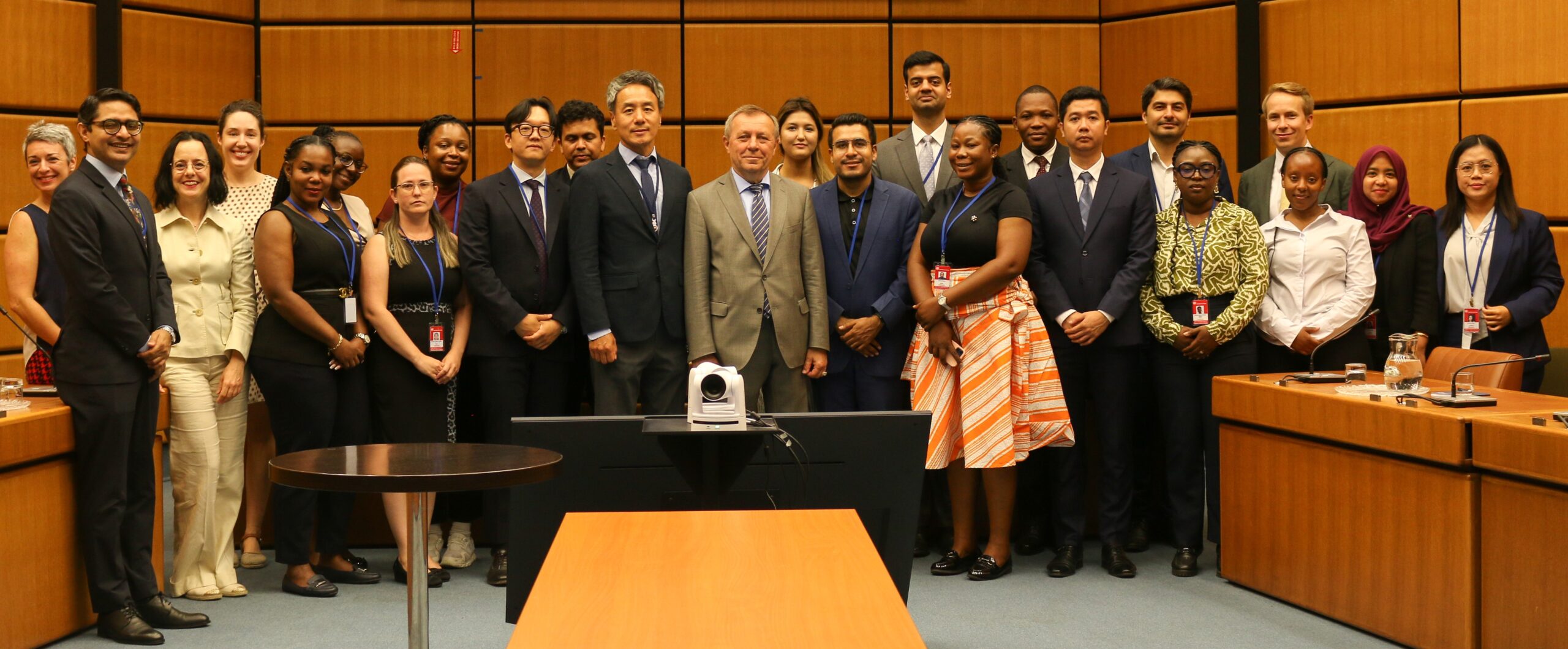
On 24 June, WA Head of Secretariat Ambassador Dr. György Molnár and Counsellor Lee Yoonseok, representing Republic of Korea in its capacity as the 2026 Plenary Chair, discussed the work of the Wassenaar Arrangement with the 2026 United Nations Disarmament Fellows. Counsellor Lee underlined the role of the WA in maintaining effective multilateral export controls, while Ambassador Molnár and officers of the WA Secretariat explained key aspects of the WA’s work including keeping the Munitions List and Dual-Use List up to date as well as continuing to develop and share best practices in the implementation of export controls. Fellows from 24 countries, including four WA Participating States and several WA outreach partner countries, took part in the programme which was organised by the UN Office of Disarmament Affairs.
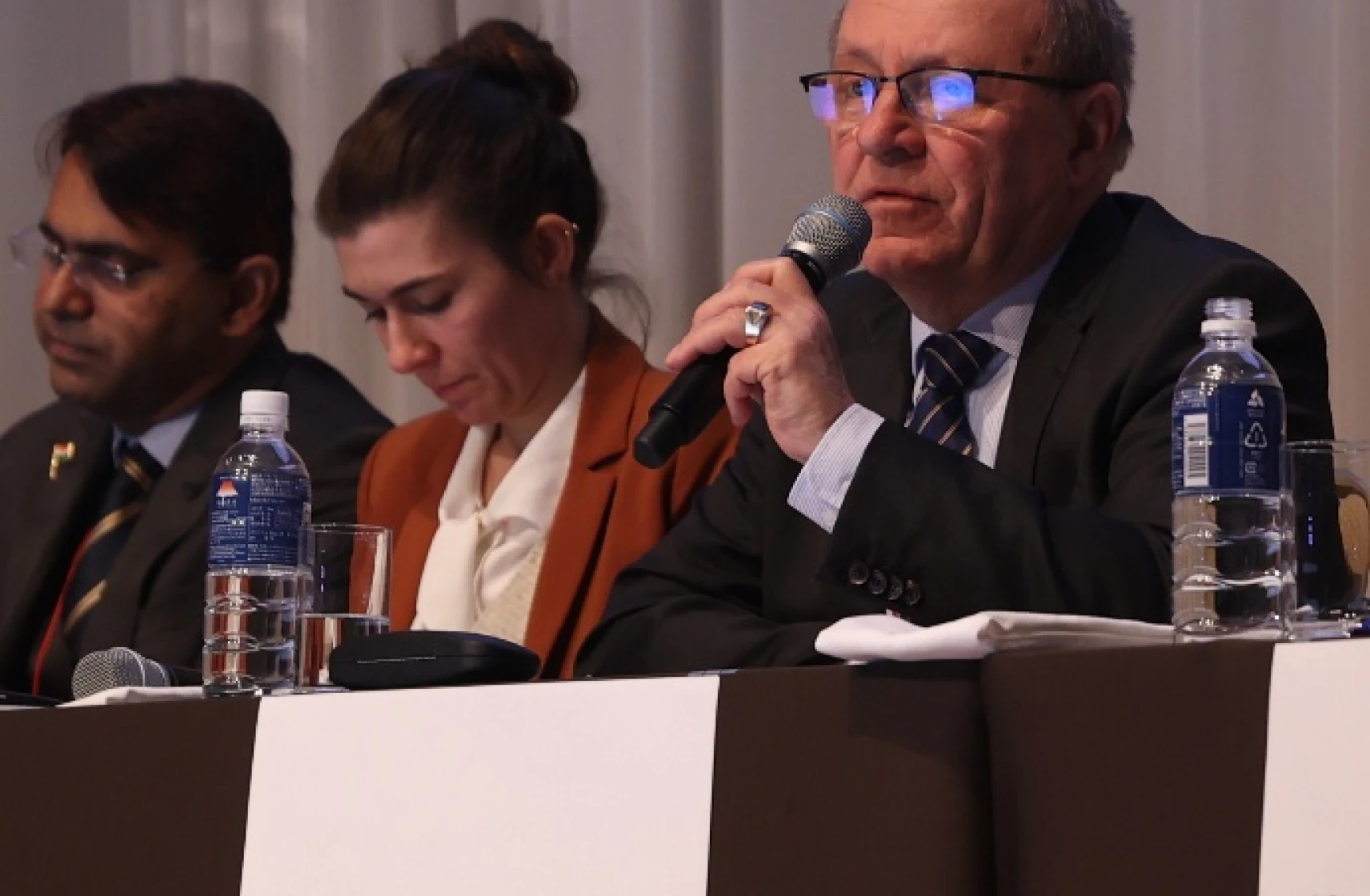
Wassenaar Arrangement (WA) Head of Secretariat Ambassador Dr. György Molnár addressed the Asian Export Control Seminar (AECS) in Tokyo, Japan, on 5 February 2026. His presentation provided an opportunity to promote the establishment of fully effective export controls throughout the Asia-Pacific region.
The Head of Secretariat provided an overview of the WA’s work, focusing on the implementation of WA standards and best practices while underlining the noteworthy updates to the WA Control Lists which were agreed in 2025.
The AECS is organised annually by the Center for Information on Security Trade Control, the Ministry of Economy, Trade and Industry, and the Ministry of Foreign Affairs of Japan.
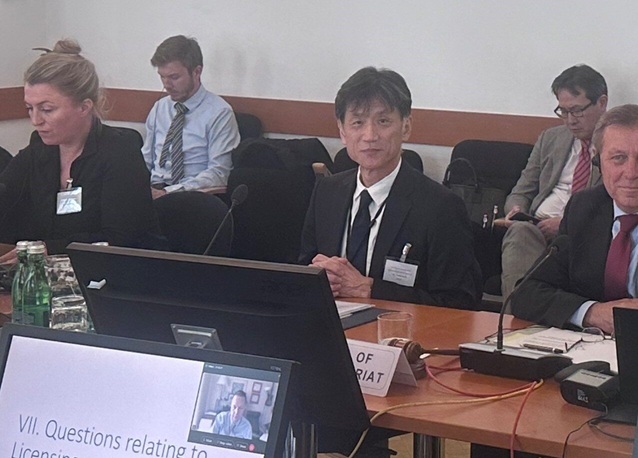
Representatives of 31 outreach partner countries and Participating States took part in an Enhanced Technical Briefing hosted by the Wassenaar Arrangement on 16 June in Vienna. Participating countries included exporters, importers and producers of conventional weapons and dual-use goods and technologies.
Ambassador Kaifu Atsushi (Japan), 2025 Plenary Chair, underlined the value of multilateral cooperation in maintaining fully effective export controls and encouraged governments to take into account accelerating advances in technology and developments in international security as they update their lists of controlled goods and technologies.
Head of Secretariat Ambassador Dr. György Molnár provided an overview of the WA’s work and noted the value of the WA Control Lists as a reference for national systems. He reaffirmed the principles on which the WA was founded, including that it is not directed at any country or group of countries, and that it does not impede bona fide civil transactions.
Experts Group Chair Anneth de Witte (Netherlands), Licensing and Enforcement Officers Meeting Chair Christian Larose (Canada) and experts from France, Japan, the United Kingdom, and the United States delivered briefings on significant changes to the WA Munitions List and List of Dual-Use Goods and Technologies adopted over the last two years as well as the implementation of WA standards and best practices. Several outreach partners provided updates regarding their national export control systems.